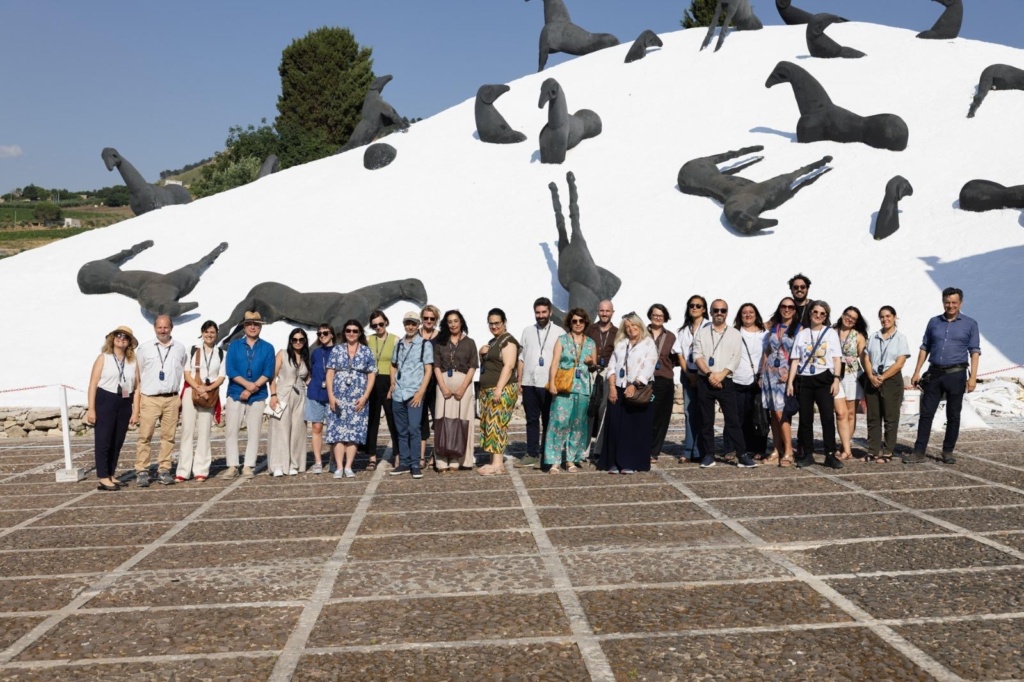
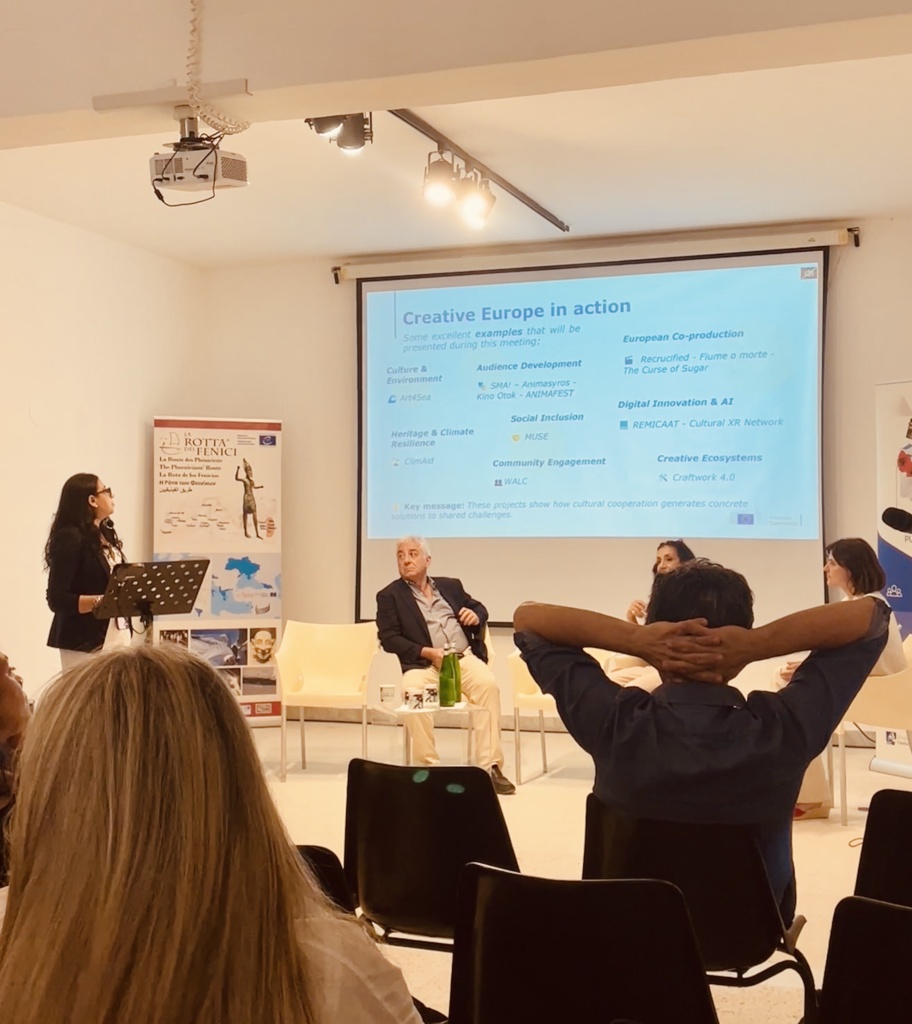
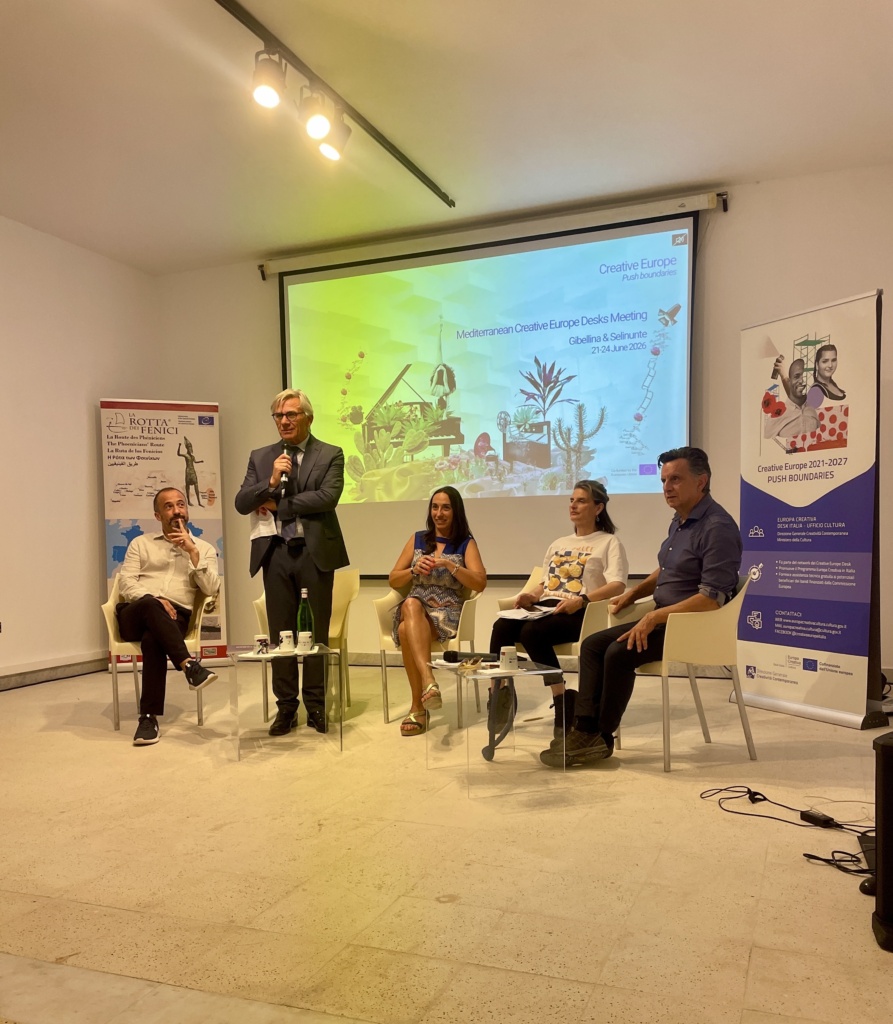
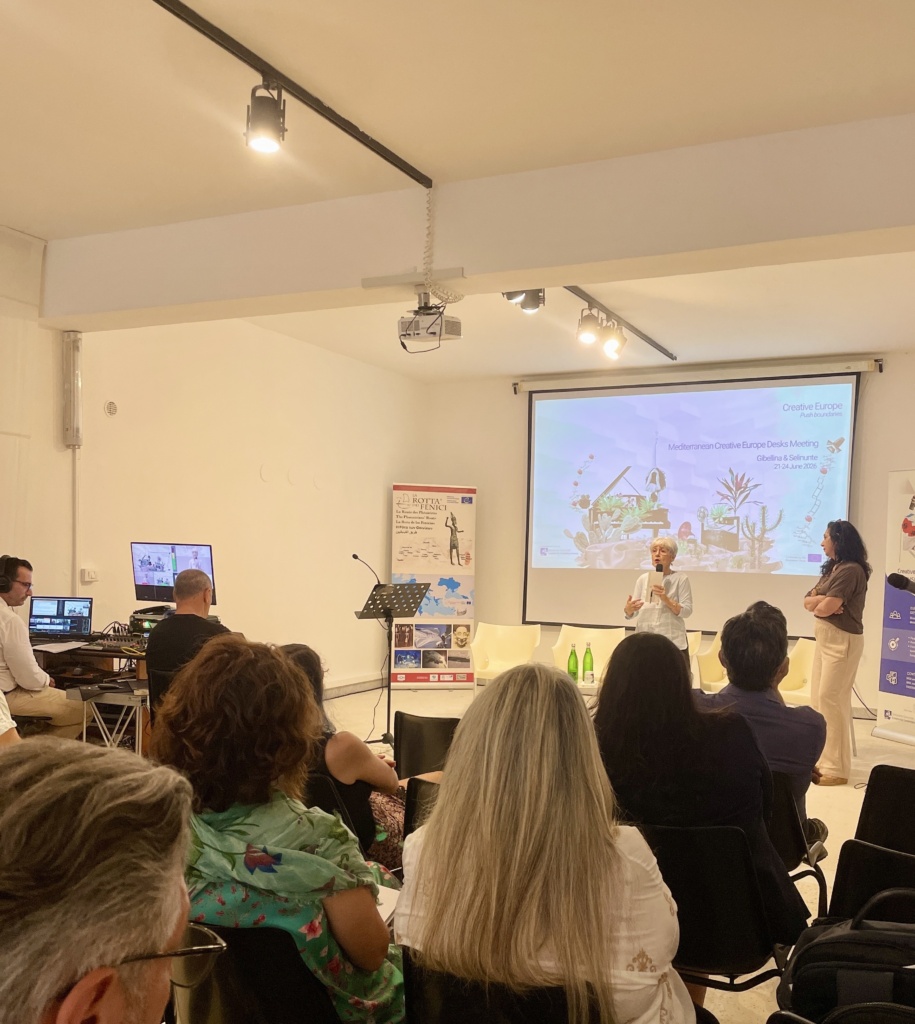
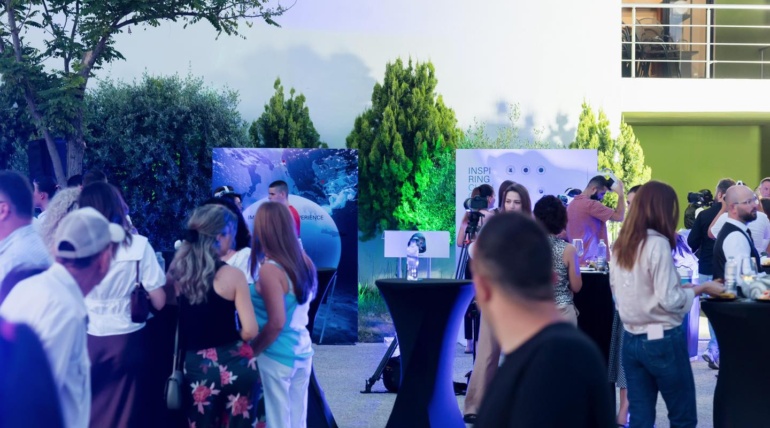
From 22 to 24 June, the Sicilian towns of Gibellina and Selinunte hosted the second meeting of the Mediterranean Creative Europe Desks.
Open to both cultural professionals and the wider public, the event explored how European funding programmes — including Creative Europe, Horizon Europe Cluster 2, Interreg, and the New European Bauhaus — can support the cultural and creative sectors. Over three days, participants exchanged experiences, showcased EU-funded projects, and strengthened cooperation across the Mediterranean region.
Three Days of Culture, Cooperation, and the Mediterranean
The opening day took place at the Orestiadi Foundation Museum in Gibellina, recently named the Italian Capital of Contemporary Art for 2026. Discussions focused on European and national policies for the Mediterranean and featured presentations of projects supported under the Creative Europe Culture strand.
The programme then moved to Selinunte for the following two days, focusing on the Cross-sectoral and Media strands of Creative Europe. It also featured the Cultural Routes of the Council of Europe, which promote human rights, cultural diversity, and intercultural dialogue.
The event began with remarks by Francesca Maria Corrao, President of the Orestiadi Foundation, who reflected on the importance of building a “living memory” capable of embracing both heritage and renewal. Recalling the 1968 Belìce earthquake and the role artists have played in preserving and reinterpreting the area’s identity, she highlighted how culture can safeguard the past while inspiring shared visions for the future.
Among the keynote speakers was Alessandra Luchetti, Head of the “Creativity, Citizens, EU Values and Joint Operations” Department at the European Education and Culture Executive Agency (EACEA). She encouraged participants to embrace the event as an opportunity for genuine exchange, sharing not only achievements but also challenges and lessons learned.
During the opening panel “International, European and National Policies in the Mediterranean: Policy Framework and Opportunities”, Silvia D’Elia, Project Officer for Creative Europe (Unit B1) and Project Officer for Art4Sea, underlined the importance of cooperation as the driving force behind Creative Europe. She emphasised how the programme helps build lasting partnerships between organisations across the Mediterranean, contributing to the development of a vibrant European cultural community.
Art4Sea: Art, Science and Ocean Literacy in Action
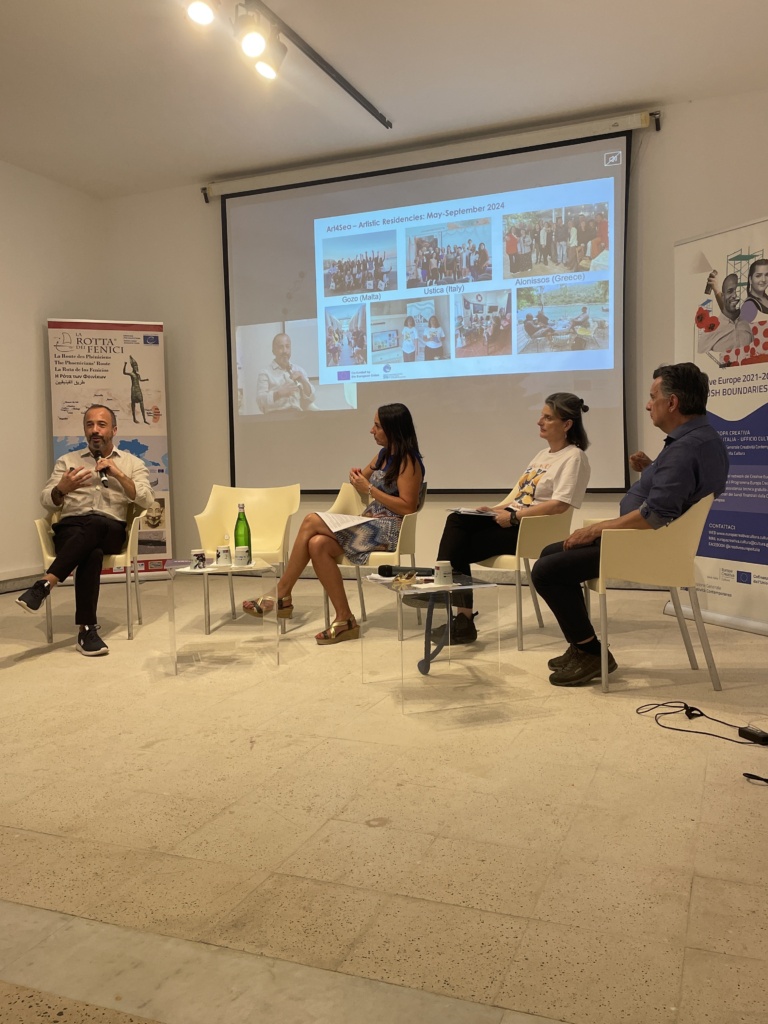
The session “Culture, Environment, Heritage & Social Engagement: How can culture address societal and environmental challenges while engaging communities?” featured Art4Sea as a best-practice example of how European cooperation can generate tangible cultural and environmental impact.
Representing the project were Fabio Bruno, President of 3D Research and Project Coordinator, together with Emilia Brandi. Bruno presented the project’s journey, highlighting its achievements, its impact on participating communities, and the lasting legacy after three years of international collaboration.
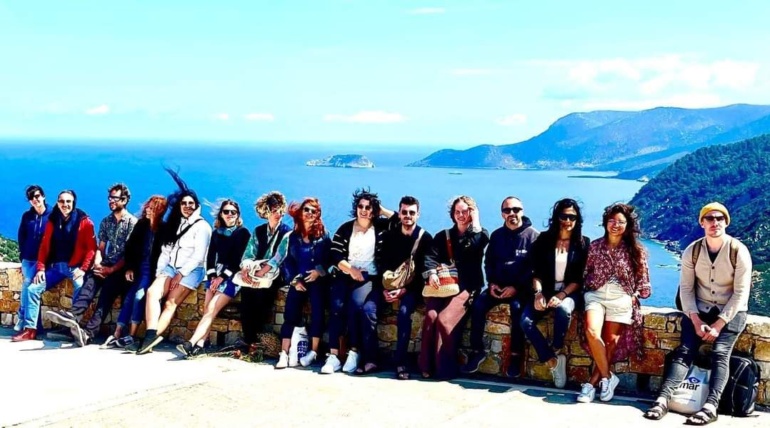
Art4Sea concluded in early 2026 after 36 months of collaboration involving artists, creatives, marine scientists, digital technology experts, and local communities from three small Mediterranean islands.
Throughout the project, partners co-created 24 artworks — 12 born-digital and 12 physical works later digitised — to promote Ocean Literacy and encourage a more sustainable relationship between people and the sea.
Art4Sea demonstrated how combining artistic practice, scientific knowledge, immersive technologies, and community participation can make complex environmental issues more accessible and engaging. Today, the artworks, their digital twins, and the project’s virtual exhibition continue to extend this legacy beyond the project’s official conclusion, reaching new audiences and inspiring renewed connections with the Mediterranean Sea.
The Role of the Creative Europe Desks
The Italian Creative Europe Desk organised the Mediterranean Creative Europe Desks meeting in collaboration with partner desks from across the Mediterranean.
Anna Conticello led the event, supported by the Italian Creative Europe Desk team — Marzia Santone, Andrea Coluccia, Enrico Proietti, and Francesca Messina — who coordinated the programme, international partnerships, and networking activities throughout the three-day event.
One message emerged consistently throughout the event: culture has the power to generate shared well-being, strengthen communities, and drive meaningful social and environmental change. By connecting people and places, supporting local economies, and fostering dialogue across borders, culture plays a fundamental role in shaping a more sustainable and inclusive future.
Art4Sea embodies this vision by demonstrating how art, science, and local communities can work together to address climate and environmental challenges through creative, participatory approaches.
Its participation in the event highlighted the project’s relevance within the Creative Europe community and reinforced its contribution to cultural innovation and environmental awareness in the Mediterranean.